
 by wonderEdge
 14 July, 2026

The first thing Ladakh does is make you slow down.
Maybe it happens when you find yourself surrounded by endless mountains with no sound except the wind. Maybe it is when you watch the colors of Pangong Lake change with the sky, drive through roads carved between rugged peaks, or stand inside an ancient monastery where time feels like it has stopped.
Every turn in Ladakh feels like discovering a place you were never supposed to find. Cold deserts, high mountain passes, hidden valleys, peaceful villages, and landscapes that stretch beyond imagination make this Himalayan region unlike anywhere else.
But a journey this extraordinary deserves more than a checklist of tourist spots. Knowing where to go, when to visit, and what experiences to choose can completely change the way you see Ladakh.
In this guide, we explore the best places to visit in Ladakh, the best season for a Leh Ladakh tour, and the unforgettable experiences that make this destination a dream for every traveler.
Ladakh at a Glance
Before the details, here is the shortlist:
- Best Time to Visit: May to September (peak season), with June and September as sweet spots for fewer crowds.
- Ideal Trip Lengths: 6 to 9 days, enough to acclimatize and actually explore.
- How to Reach: Fly to Leh, or road-trip via the Manali-Leh or Srinagar-Leh highway.
- Altitude to Prepare for: Leh sits at roughly 11,500 ft. Acclimatization is not optional; it’s survival.
- Unmissable Three: Pangong Tso, Nubra Valley, and Leh Palace
Keep this in your back pocket, and everything below builds on it.
Famous Places in Leh Ladakh You Can’t Skip
These are the names you have probably already heard. They are famous for a reason, but there is usually more to each one than the postcard version.
1. Pangong Tso Lake
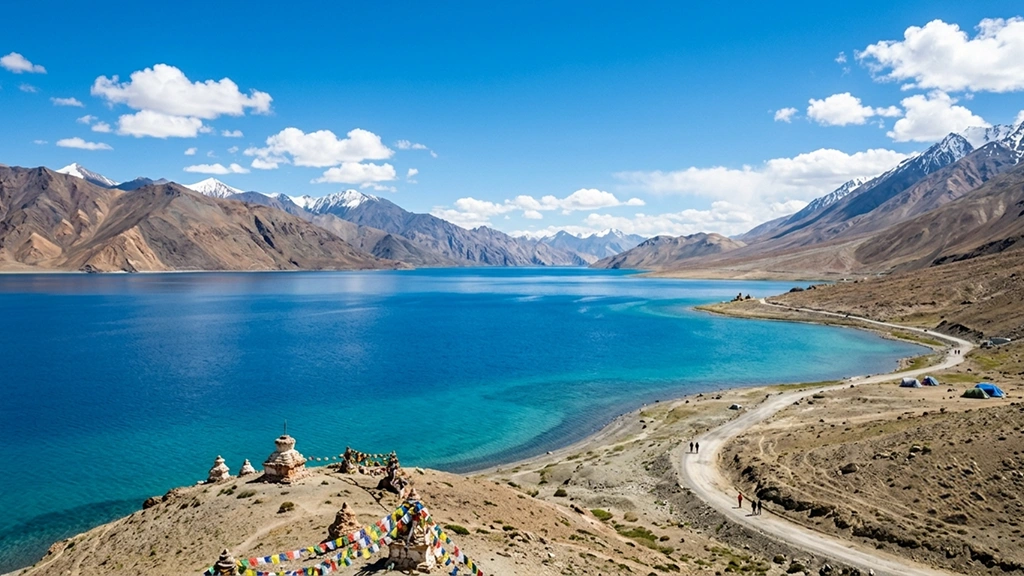
The lake that changes color depending on the hour; deep blue at noon, almost silver by evening, sometimes streaked with turquoise if the wind’s been still. It stretches so far into Tibet that you genuinely cannot see where it ends, which is part of what makes it feel less like a lake and more like an ocean stranded at 14,000 feet.
Most day-trippers arrive, click a photo, and leave before the light does anything interesting. Stay overnight instead. The temperature drops fast once the sun’s gone, so pack layers, but is it worth it, the stars over Pangong, with zero light pollution for miles, are arguably better than the lake itself.
Ask any traveler who is actually camped here, and the lake is rarely the part they talk about first.
2. Nubra Valley
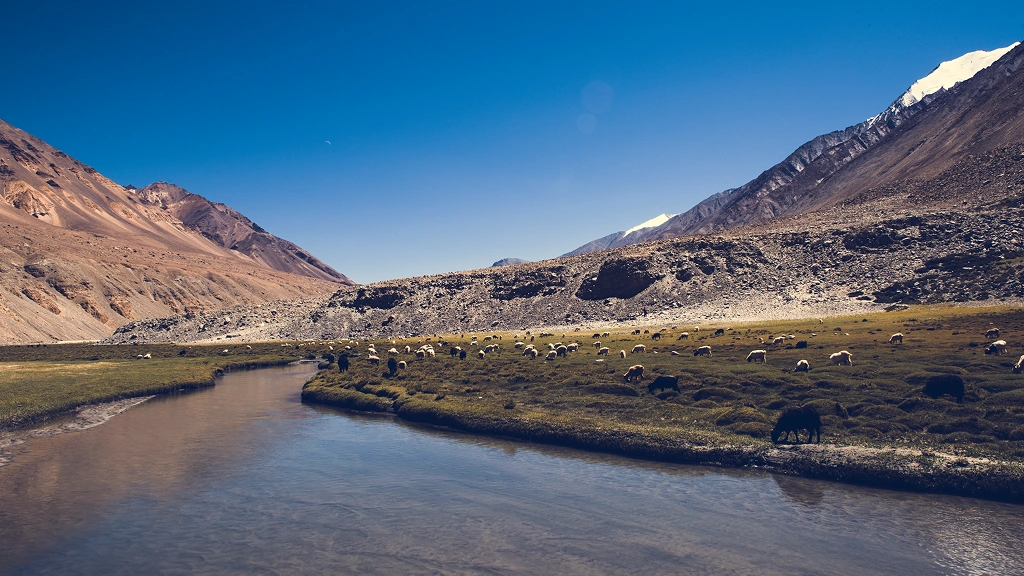
Sand dunes at 10,000 ft., flanked by snow peaks; Nubra does not quite make sense until you are standing in it. Getting there means crossing Khardung La first, so the valley often feels like a reward rather than just another stop.
Ride a double-humped Bactrian camel across Hundred’s dunes, a species found almost nowhere else in India, then head to Diskit Monastery for a view that stretches across the entire valley floor.
Nubra almost makes a good base for slower travelers; the place here is noticeably gentler than Leh, and the villages along the Shyok River are worth a wander if you have an extra day to spare.
3. Leh Palace and Leh Market
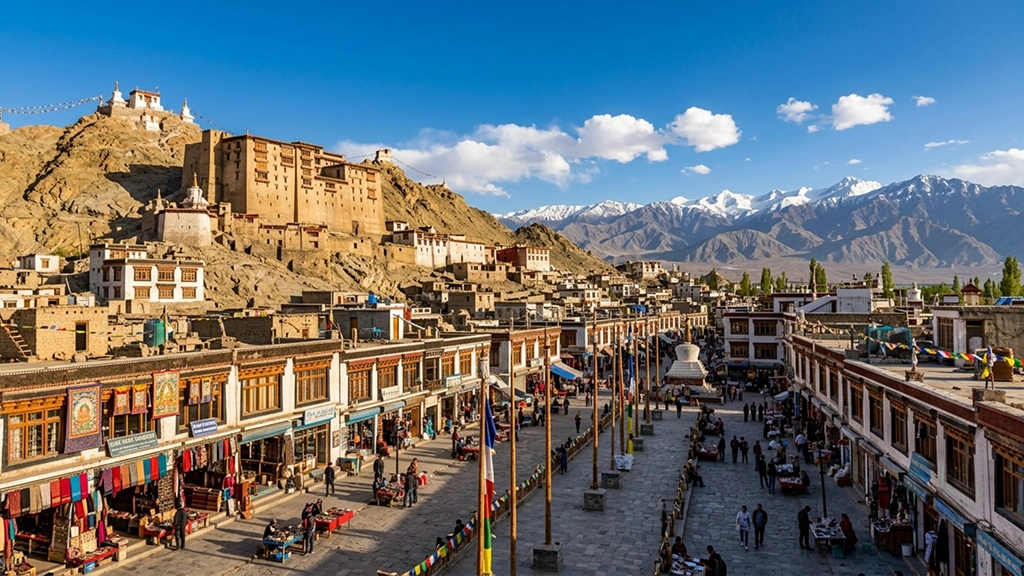
For a break from the wilderness, Leh’s old town delivers history and buzz in equal measure. The nine-story Leh Palace, modeled after Lhasa’s Potala Palace, once housed the royal family of Ladakh before they moved to Stok Palace, and its upper floors offer one of the best sunset views over the town.
Below it, the market is lined with Tibetan handicrafts, apricot vendors, and tiny cafés serving butter tea that tastes better than it sounds. It’s also where most travelers do their acclimatization days, and where most treks and biking routes into the mountains actually begin, from gear rentals to guides plotting the next few days. Mornings spent wandering, afternoons spent resting, evenings spent planning the harder days ahead.
4. Magnetic Hill and Sangam Point
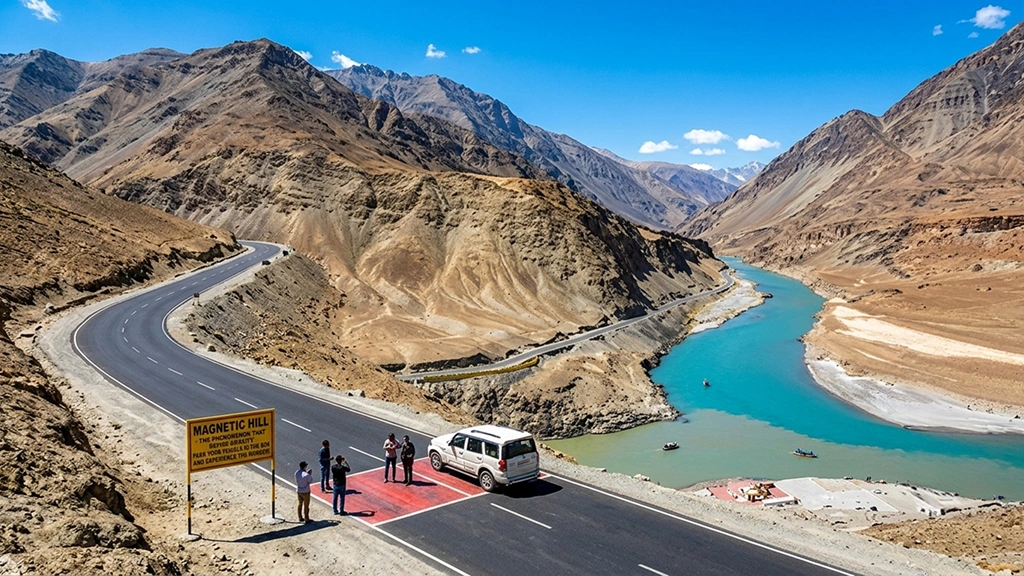
Magnetic Hill plays a trick on your eyes and your car, which appears to roll uphill on its own when parked at a marked spot on the road. Scientifically, it’s an optical illusion created by the surrounding slopes, but that doesn’t stop it from being one of the most talked-about stops on any Ladakh road trip.
It’s a quick detour en route to Sangam Point, where the muddy Zanskar and the clear Indus rivers meet and refuse to blend, running side by side in two distinct colors before finally merging, and where rafting trips on the Zanskar often begin for those looking to add some white water to the itinerary.
Both spots take barely twenty minutes each, but they’re the kind of stops that break up a long, adrenaline-heavy drive well.
5. Khardung La Pass
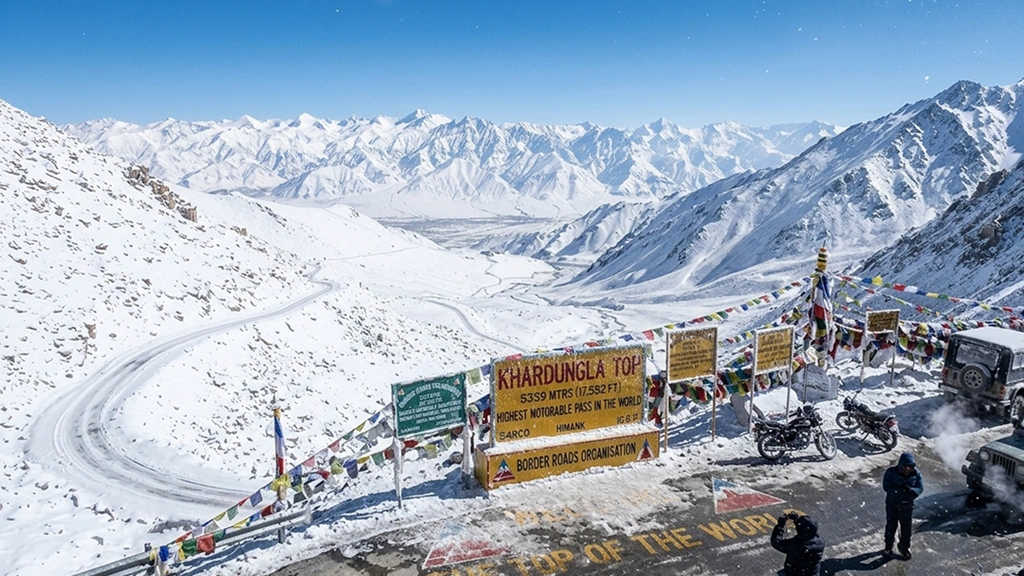
Once billed as the world’s highest motorable road, Khardung La is less about the claim and more about the feeling, snow at your feet even in peak summer, prayer flags snapping overhead in air so thin it makes casual conversation feel like effort, and a view of the Ladakh range that makes the climb worth every hairpin turn.
There’s a small café near the top serving hot tea and Maggi noodles, which somehow becomes one of the most memorable meals of the trip simply because of where you’re eating it. Most travelers only stop for photos, but even ten quiet minutes here is enough to understand why this pass has become shorthand for “making it” to Ladakh.
Beyond the Obvious: Ladakh’s Offbeat Corners
This is where a trip stops looking like everyone else’s Instagram feed. If you are chasing the quieter, wilder side of Ladakh, these are the places worth building your itinerary around.
6. Tso Moriri Lake
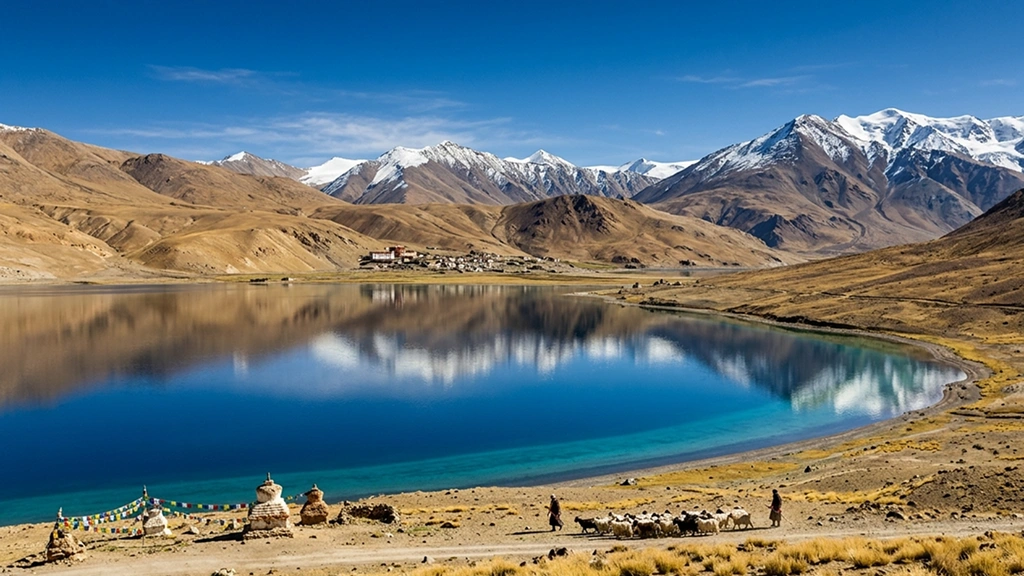
Pangong’s calmer cousin, tucked farther from the main circuit and visited by a fraction of the crowd. It takes a longer, bumpier drive to reach, which naturally filters out anyone not committed to going the extra distance, and that is exactly why it stays so quiet.
Ringed by the Changthang plateau and home to migratory birds and the occasional Tibetan wild ass, Tso Moriri feels like Ladakh before it became a bucket-list item. The nearby village of Korzok, with its small monastery and handful of homestays, adds a slower, more local texture to the visit than the more commercialized lakes further north.
7. Zanskar Valley
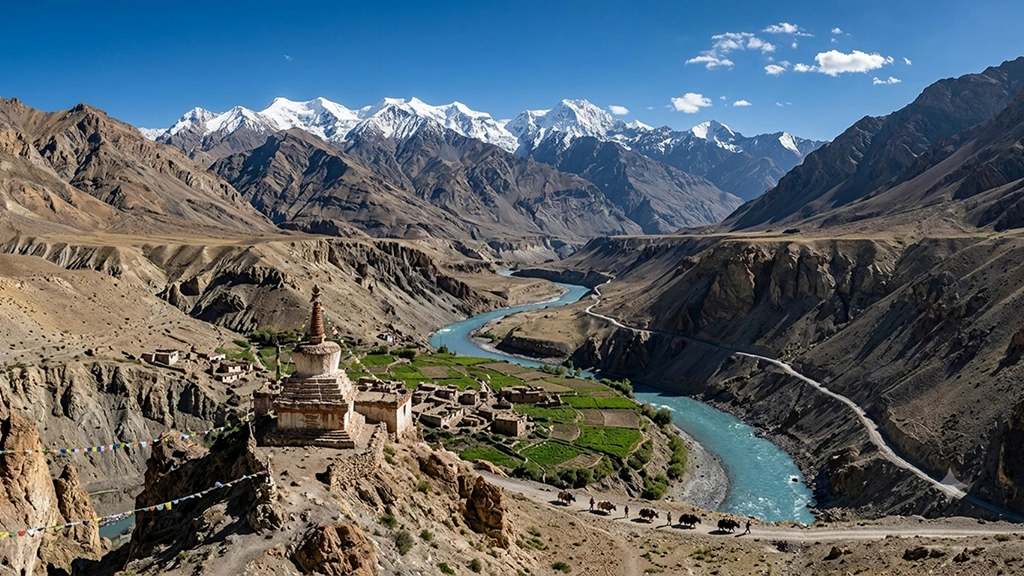
For travelers who want their adventure to have some grit to it, Zanskar delivers. In winter, the frozen river becomes the legendary Chadar track route, walked for centuries by locals when the mountain passes close, and now attempted by a small number of trekkers each year who are willing to sleep in caves along the ice.
In summer, the valley opens up into some of the most dramatic, least-photographed terrain in the region, with the ruined Zangla fort and the remote Phugtal Monastery, built directly into a cliffside, among its quieter highlights.
Getting here still takes effort, which is precisely why it has not been overrun.
8. Turtuk Village
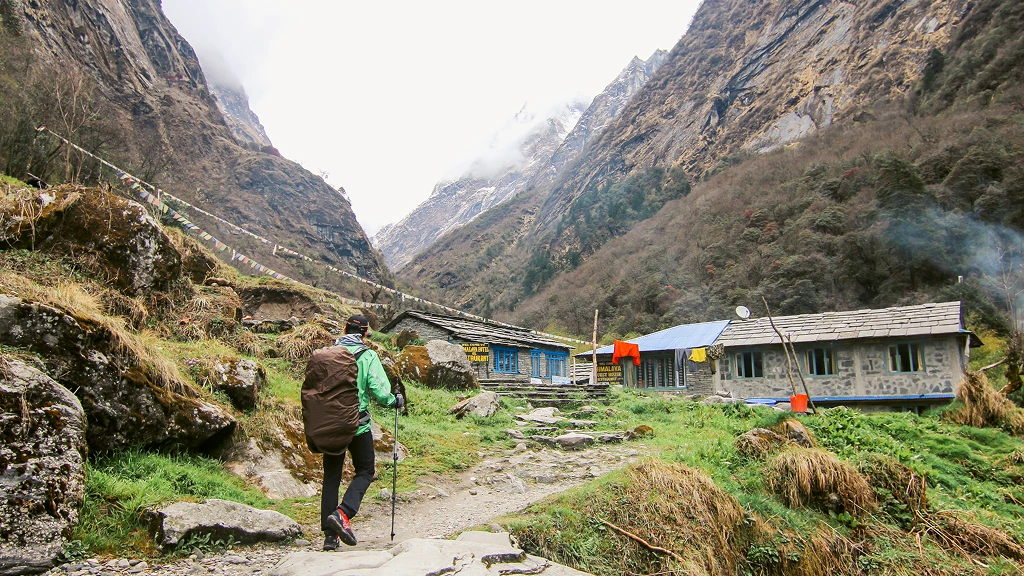
A Balti village near the Pakistan border that only opened to tourists in 2010, Turtuk feels like a different country entirely – apricot orchards, wooden houses, and a slower rhythm shaped more by Baltistan than by mainstream Ladakh. The village sits right along the Shyok River, with stone pathways winding between traditional homes that have barely changed in generations.
Locals here speak Balti rather than Ladakhi, and the cuisine, architecture, and even the fruit varieties feel distinctly different from anything else on the usual Ladakh circuit. Very few travelers make it this far. That’s exactly the point.
9. Hanle
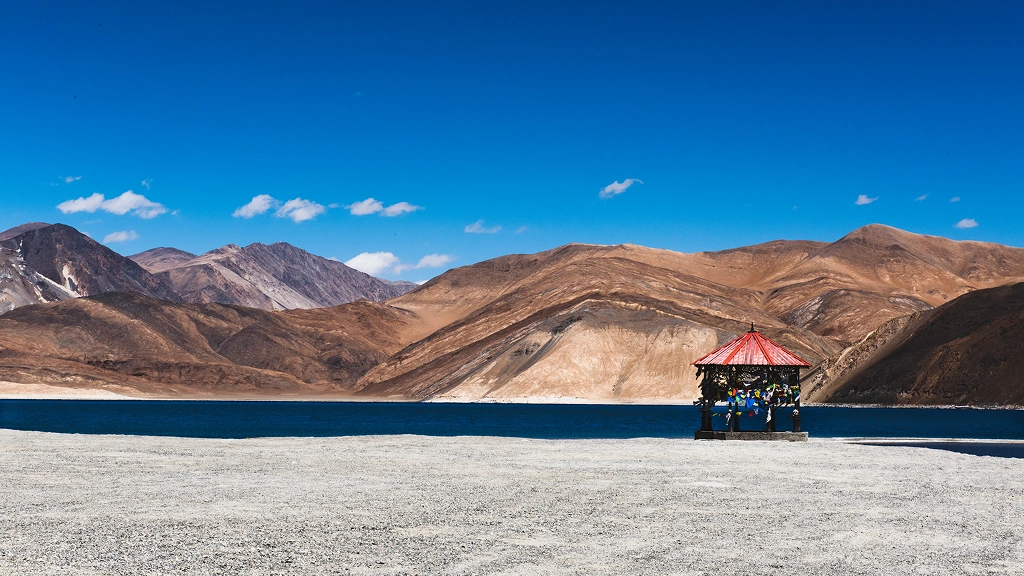
India’s first dark sky reserve, and one of the best stargazing spots on the planet. No light pollution, some of the highest-altitude observatories in the world, and skies so clear you can see the Milky Way without trying.
The Indian Astronomical Observatory here sits at nearly 15,000 feet, and on a clear night, telescopes are sometimes made available for visitors who want more than the naked-eye view.
The drive to Hanle is long and remote, but that isolation is exactly what keeps the skies this dark. If Ladakh is about perspective, Hanle is where you get the widest one, literally.
For the Adventure Seeker: Ladakh Beyond the Lakes
If postcard views aren’t the point of your trip, Ladakh has an entire second layer built for people who’d rather earn the view than just look at it.
- Markha Valley Trek, a multi-day trek through one of Ladakh’s most iconic valleys, crossing high passes, remote villages, and views of Kang Yatse peak that no road trip can match
- Chadar Trek, walking directly on the frozen Zanskar River in winter, sleeping in riverside caves, and covering ground that’s impassable any other time of year
- White-water rafting on the Zanskar and Indus, grade II to IV rapids depending on the stretch, usually runs between June and September
- Mountain biking from Khardung La to Leh, a long, high-altitude descent that’s become something of a rite of passage for cyclists visiting the region
None of these are add-ons squeezed into a sightseeing trip; they’re the reason some travelers come to Ladakh in the first place.
The Monastery Trail: Spiritual Ladakh
Ladakh’s monasteries, or gompas, are as much a part of the landscape as its mountains.
- Thiksey Monastery, often compared to Lhasa’s Potala Palace for its tiered, cliffside architecture, with sweeping views of the Indus valley below.
- Hemis Monastery, the largest and wealthiest in Ladakh, home to a vibrant summer festival if your dates line up.
- Diskit Monastery, paired naturally with a Nubra Valley visit, is watched over by a towering 106-foot Buddha statue.
Even a couple of hours on this trail adds a layer to the trip that the lakes and passes alone don’t.
Best Season for a Leh Ladakh Tour: Month by Month
There is no single “right” month for Ladakh. Different seasons just suit different kinds of trips.
| When | Best For | Where |
| May-June | Road trips, quieter crowds, snow-capped views | Leh, Nubra Valley, Khardung La |
| July-August | High passes, lakes, and festival season | Pangong Tso, Hemis Monastery, Nubra Valley |
| September | Photography, clear skies, offbeat exploration | Tso Moriri, Hanle, Turtuk |
| October-April | Winter trekking, frozen-river expeditions | Zanskar Valley (Chadar Trek) |
So when someone asks for the best season for a Leh Ladakh tour, the honest answer is: it depends on which Ladakh you want to visit.
How WonderEdge Does Ladakh Differently
We don’t run Ladakh trips the way most operators do. Most itineraries here look identical, the same five stops, the same convoy of a dozen cars, the same rushed morning-to-evening pace that leaves barely any room to actually feel the place. We built WonderEdge around the opposite idea: that a trip to somewhere this rare should never feel routine.
That shows up in a few concrete ways:
- Small groups, always: no 20-person convoys stopping at the same five spots everyone else stops at
- Routes built around the offbeat as much as the iconic: Turtuk and Hanle get as much attention as Pangong and Nubra
- Slower itineraries: enough breathing room to actually acclimatize, wander, and sit with a view instead of just photographing it
- Local-first planning: routes shaped with people who actually live and travel through Ladakh, not templated from a brochure
If a place is “beyond the ordinary,” it’s on the route. If it isn’t, it’s not.
Ready to See Ladakh Properly?
Ladakh is not a place you check off a list; it is a place that changes how you see distance, silence, and scale. Whether it is the color-shifting waters of Pangong or the quiet apricot lanes of Turtuk, the best places to visit in Ladakh are the ones that ask something of you before they give something back.
If that’s the kind of trip you are looking for, WonderEdge is already planning the route.